
SBR 79: Mise en place before the media plan
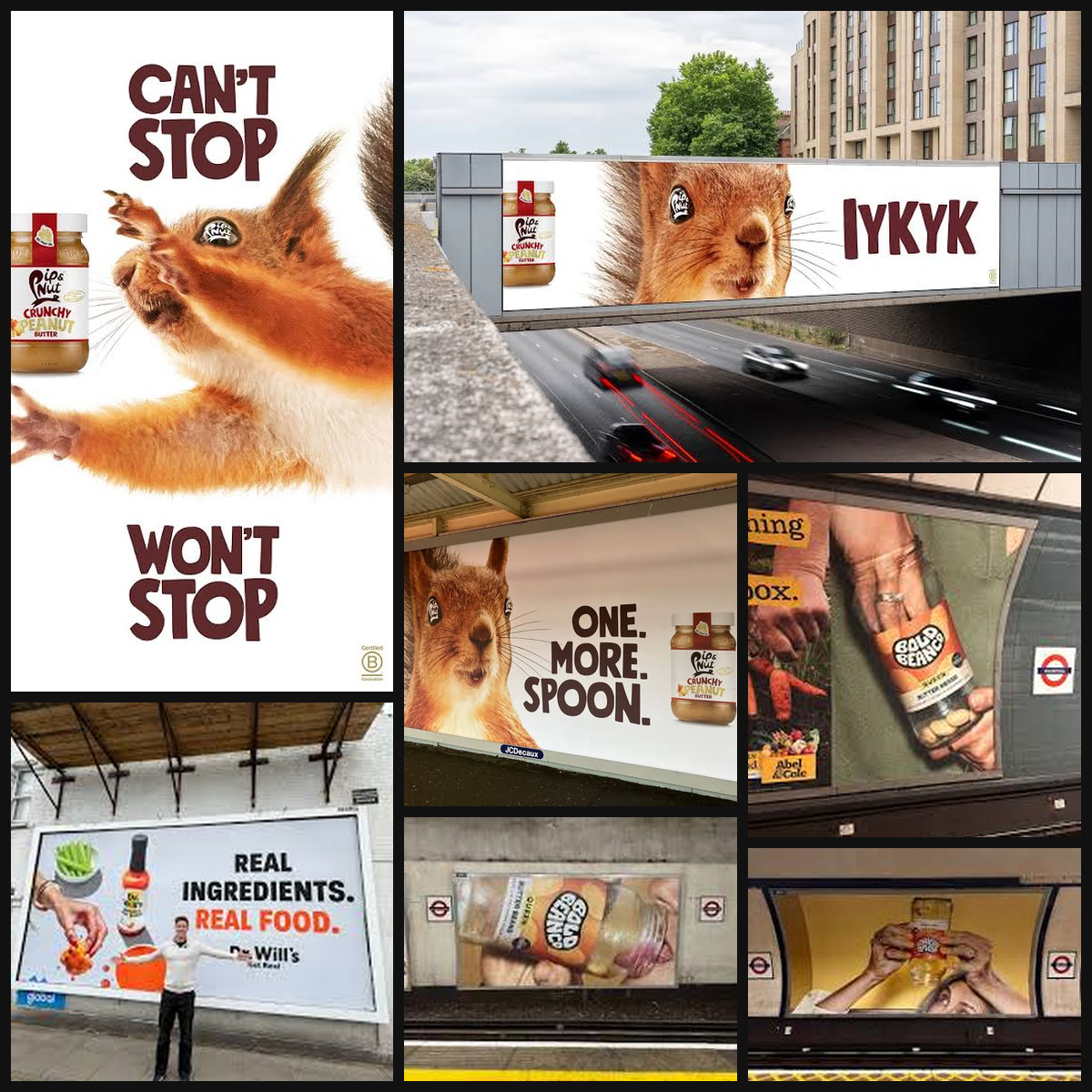
Some of the food brands we met in BBD's early days are now advertising. Good for them. They deserve every success. If that's your ambition too, here's what needs to be in place before you write those cheques.
Ask any decent restaurant and they'll tell you the same thing. Service is won or lost before the first ticket comes in. Onions diced, stocks made, knives sharp, everything exactly where your hand expects it to be. The French call it mise en place. Skip it and a busy Friday night service eats you alive.
Brand advertising works the same way. In BBD's first couple of years I met several founders and marketers running startup food brands. Some of those brands are now buying proper media. Pip & Nut is calling 2026 its biggest-ever year of above-the-line investment: £3.5m, with TV on Sky, ITV and Channel 4 and a peanut-butter-obsessed squirrel loose on the London Underground. Bold Bean Co has just run its first paid media campaign with Uncommon, alongside a Soho pop-up. Dr Will's has started dipping a toe in too.
I'm genuinely chuffed for them - they’re all lovely people who deserve success.
But this is also a good moment to deal with a line that often gets peddled: that the challengers’ brand building playbook is different to that of established brands. That they somehow build brands differently to the big boys.
They don't. That advice is expensive bullshit.
Same rules, smaller budget
The Ehrenberg-Bass Institute has spent decades showing that growth comes mostly from encouraging more people to buy your product, not from a small band of fans loving you harder. And double jeopardy, one of the patterns Byron Sharp sets out in How Brands Grow, makes life tougher for the little guys: smaller brands have fewer buyers, and those buyers are slightly less loyal too.
So challengers don't get a different rulebook. They get a smaller budget and less room for error.
When I spoke at the NatWest Accelerator's Festival of Marketing in July, alongside Kurt Edwards from Sky AdSmart, I opened with a line I'd tattoo on every founder's forearm if they'd let me: small budgets punish vague strategy.
Advertising is an amplifier. It makes whatever's already there louder, including the gaps. The framework from that session is simple. Make your brand easy to think of, easy to find, easy to buy and easy to use.
In Ehrenberg-Bass terms, the first is mental availability and the next two are physical availability. Easy to use is what turns one purchase into a habit. Above-the-line advertising is mostly a tool for the first. Spend on it before the other three are ready and you're paying to amplify the gaps in your strategy and the decisions you didn’t make.
So here are a couple of questions to ask yourself:
Can people easily find your product? Advertising something people can't find is paying to annoy them. Be honest with yourself about weighted distribution, not just your number of listings. Ten SKUs in a retailer's top 200 stores is not national availability, however good it felt when you got the email.
Is the ad near the shop? Plenty of challengers are strongest in London and the South East, in Waitrose, Ocado and the bigger Sainsbury's stores. An expensive London based campaign makes sense for a brand like that (although I’d advocate for trying to find another pocket of cheaper distribution to test in first).
Will they recognise the pack? This is where physical and mental availability meet. Your distinctive assets (colour, shape, logo, character) have to do the job on screen and on shelf. If the ad and the pack don't look like each other, you're asking a tired shopper to join the dots on their own, in a busy aisle, in about three seconds. Make the pack the hero of your ads, especially in the early years.
What's the one thing to say?
Mental availability isn't the same as awareness. It's whether your brand pops into someone's head in the moments that matter. Jenni Romaniuk at Ehrenberg-Bass calls these category entry points: the needs, moments and cues that put someone in the market to buy from your category. "Something quick for a weeknight tea." "A lunch that's healthier but still fills me up." "Something to make toast less boring."
Plenty of these entry points are functional, and that's fine. Nobody needs a political manifesto about cereal. The strategic job is picking the one that matters most and tying your brand to it, in a distinctive way.
Then the creative team gets to make people care about that link, and do it in a way that could only be you. Functional entry point, emotional execution, distinctive delivery. Pip & Nut's squirrel is a good example. "You'll want this on your toast" is a plain idea. A squirrel losing its mind over a jar is memorable, and nobody else can use it.
A brand benefit ladder helps here too. It runs from what the product is, to what it does for you, to how it makes you feel. Don't try to climb the whole thing in your first outdoor ad. You’ve got time to climb the ladder in the coming years. Pick the rung that matches the entry point you're going after. This is exactly what we’re doing with a new client at the moment, helping them to unlock a blockage with their creative agency.
Find the biggest leak
To work out which job matters most, I still use the path to purchase. It's an imperfect model - people don't move through neat little stages. But it's a good way of diagnosing where are we losing the most people?
• Lots of people know you, few have tried you? That's probably an easy-to-find or easy-to-buy problem: availability, price or pack. More advertising won't fix it.
• Good trial, poor repeat? That's easy to use. Look at the product, the price, or how well it fits real life. Sort that before you go near a media plan.
• People who try it love it, but it rarely comes to mind? That's a mental availability gap. Now you've got a case for above-the-line.
Fix the biggest leak and point the majority of your money at it.
Growing up
None of this is sexy. Distribution, store maps, distinctive assets and a path-to-purchase diagnosis may not win you a Cannes Lion. But they decide whether your first campaign builds a brand or just burns the latest funding round on a handsome advert.
If you're weighing up your first big campaign and want someone who's sat in the client chair to look over the fundamentals first, the coffee/tea/beer is on us.