
What is a marketing strategy?
Let’s break it down.
Quick Answer:
A marketing strategy is a clear plan that defines who you're targeting, what makes your brand different, and how you'll reach those customers to hit your business objectives. It's the thinking that comes before the doing. Everything else (ads, NPD, pack design, emails, social, promotions) should flow from it.
If you've Googled this question, chances are one of two things is true. Either you're building a strategy from scratch and want to get it right, or you've got a nagging feeling that what you're calling a "strategy" is actually just a list of things you're doing. Good news: you're not alone. In our decades of experience, most FMCG and food & drink brands fall into the second camp without realising it. This guide breaks down what a marketing strategy actually is, the components a good one needs, how to tell if yours has any gaps, and real examples of strategy in action from brands like Weetabix, John Smith's, Bulmers and Arla.
WHAT IS A MARKETING STRATEGY?
A marketing strategy sets the guardrails for every marketing decision you make. It turns scattered activity into focused, consistent growth by answering the big questions up front: who is your audience, what do you stand for, how are you different, and how will you measure success?
Once those questions are answered, your tactics (the ads, the emails, the social posts, the in-store promotions etc) all pull in the same direction instead of fighting each other for attention. Without that foundation, you end up with a brand that looks and sounds like three different companies depending on which channel someone finds you on. And we all know the importance of compounding results.
Marketing Strategy vs. Marketing Tactics
This is where most of the confusion comes from, and it's worth spelling out clearly because the two get used interchangeably all the time.
Tactics are the individual activities: a paid social campaign, an email sequence, a retail promotion, a piece of packaging design.
Strategy is the decision-making framework that determines which tactics you use, what tactics you choose not to use, why, and in what order.
The difference matters in practice: a strategy without tactics never gets delivered. It stays a nice document nobody acts on. Tactics without a strategy is just expensive guesswork. You end up busy, but not necessarily building anything. If your marketing feels like a hamster wheel of one-off campaigns that never quite add up to more than the sum of their parts, you probably have tactics, not a strategy.
A wise man once told us, "measure twice, cut once." It's as true of a brand's marketing strategy as it is of building a kitchen cupboard. The time you spend thinking beforehand is what stops you wasting budget after.

The Core Components of a Marketing Strategy
A proper marketing strategy needs to answer six things. Skip one, and you'll feel the pain later.
1. Objectives. What is the strategy actually trying to achieve, and how will you know if it's worked? Vague ambitions like "grow the brand" aren't objectives, you need something measurable, time-bound, and tied to the business (market share, penetration, rate of sale, footfall, whatever's relevant to your category).
2. Audience. Not a demographic label like "millennials" which tells you almost nothing useful. A useful audience definition captures behaviour, need states, and what actually motivates someone in your category to buy. "Our audience is the sort of person who buys their pet a present" tells a creative team more than any age bracket ever will.
3. Positioning and differentiation. What do you stand for, and how is that different from the alternatives on the shelf? If you can't articulate why someone should choose you over the brand next to you, neither can your customer. Remember, this needs to be simple - something that can be communicated at shelf in a couple of seconds.
4. Category entry points. The moments, occasions and triggers that make someone think of your category at all, and where you have a genuine right to show up. FMCG brands that map these well tend to build stronger mental availability than brands that only think about their category in the abstract.
5. Channels. Where and how you'll reach your audience and just as importantly, where you won't. Trying to be excellent everywhere usually means being mediocre everywhere. A channel-agnostic communications plan beats a "digital first" one; being agnostic about channel forces you to choose based on where your audience actually is, not on what's fashionable.
6. Measurement. How you'll know if any of this worked. If you can't measure it, you can't defend the budget for it next year.
How Do You Know If You've Actually Got One?
The 11-Point Checklist
Everyone says they have a marketing strategy. Fewer actually do. Here's a checklist we use with clients. Be honest with yourself as you go through it - nobody’s checking your answers here - it’s a safe space.
Have you carried out robust market research and analysis, including a market segmentation? You should have identified and prioritised your target within the total market, based on audience behaviour and needs, and where you feel you have a right to win.
Do you really understand your audience? Not a trite description like "millennials" that's useless. Do you have an insight that brings your target to life?
Do you know how your product differs (or doesn't) from your competitors? If the honest answer is "not really," that's your first gap. And don’t worry if your product is very similar or identical to a competitor brand - there are plenty of success stories of brands built on positioning.
Do you know what motivates your target audience to buy products in your category? Not just why they'd buy you specifically, what gets them into the category at all.
Do you know how you are perceived by your target audience and how you want to be perceived? The gap between those two answers is often where the real marketing work lies.
Do you know which of those perceptions you can and will talk about, and when? Not everything true about your brand is worth saying in every campaign.
Do you know what your brand tone of voice and personality is? If three different people could write your next ad and produce three completely different-sounding brands, this needs work.
Do you have an organising idea that all your marketing revolves around? A single thread that ties campaigns together over time, rather than each one starting from scratch. That way is messy and becomes a constant churning out of content that doesn’t compound.
Do you have a channel-agnostic communications plan? If you've got something like "digital first," that's not agnostic. Just sayin'.
Have you clearly articulated your objectives, and do you know how you're going to measure success? Revisit point one above if the answer's fuzzy.
Have you summarised all your thinking onto one page? Yes. One. Page. If it takes forty slides to explain your strategy, it's not a strategy yet, it's a work in progress. (We've written a simple guide to building a one-page marketing plan if you want a template for this.)
If you've said no to any of these, you've got at least some gaps in your thinking. Said no to a few? Your strategy is built on assumptions rather than evidence. Either way, you're in good company, it's the most common starting point we see. If you want more on spotting the gaps, we've also written about how to know if you actually have a marketing strategy at all.
COMMON MARKETING STRATEGY MISTAKES
Confusing a busy calendar for a strategy. Lots of activity isn't the same as focused activity. If you took away the calendar, could you still explain the plan in a sentence?
Defining the audience by demographics alone. Age and gender don't explain motivation. Behaviour and need states do.
Chasing every channel instead of choosing. More channels isn't more strategy — it's usually less budget per channel, spread thinner.
No organising idea. Without one thread running through the work, every campaign starts from zero and nothing compounds.
Skipping measurement until after the campaign's live. If you haven't defined success before you start, you won't be able to defend the results afterwards — good or bad.
What a Good Marketing Strategy Looks Like in Practice
You can browse the full set of marketing strategy examples to see more of how this plays out across FMCG categories.
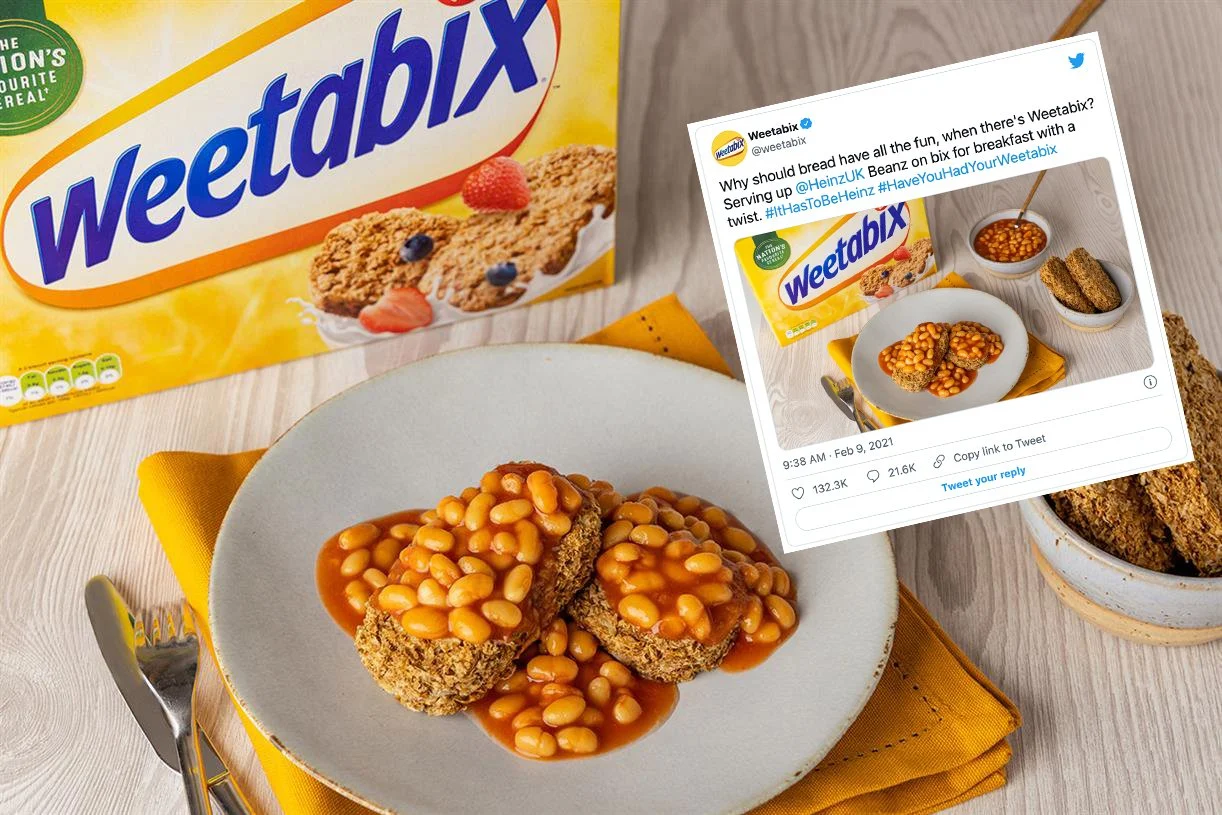
Weetabix: a British icon that had stopped feeling relevant. Rather than more of the same advertising, the strategy looked beyond traditional media entirely, resulting in the "Beanz on Bix" campaign — which won awards, got mentioned in the House of Commons, and broke the internet. See how Weetabix broke the internet.
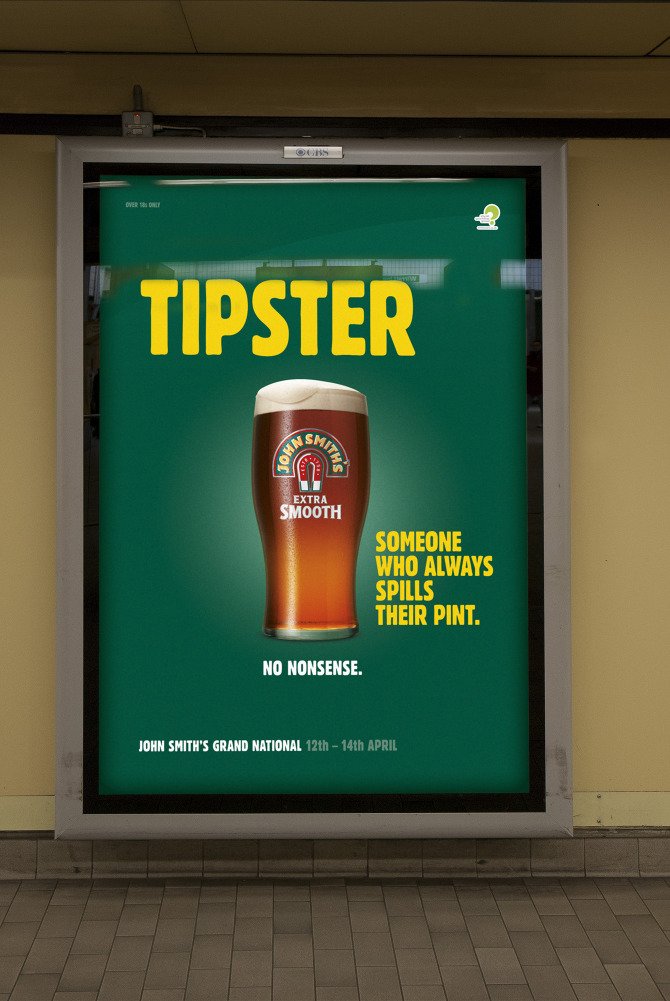
John Smith's: brand equity was on the skids, and the Grand National sponsorship wasn't earning its keep. Instead of another logo-on-a-jockey campaign, the strategy centred on one organising idea: bring the atmosphere of the world's greatest steeplechase to John Smith's drinkers, wherever they were. That included buying a racehorse and giving customers a share in it. Brand equity grew 13 percentage points over two years, with sales up 569% in Tesco. Read the John Smith's case study.

Bulmers: growing the fruit cider range needed a strategy that balanced innovation with brand consistency, so new flavours reinforced the brand rather than diluting it. Read the Bulmers flavour strategy.
Merry Hill had changed, but shoppers hadn’t fully reappraised it. The strategy was to move perceptions from a practical shopping trip to a more distinctive, complete day-out destination. We did this by connecting target audiences, category entry points, media, events, leasing, digital, shopper experience and measurement into one clearer system. Read the Merry Hill case study.
MARKETING STRATEGY FAQS
-
Strategy in marketing is the decision-making framework that sits above individual campaigns, it defines your audience, positioning and objectives so that every tactic you run is working towards the same goal, rather than in isolation.
-
A marketing strategy is the thinking: who you're targeting and why, what you stand for, how you'll win. A marketing plan is the execution of that thinking: the specific campaigns, channels, timings and budgets used to bring the strategy to life.
-
Shorter than you think. If you can't summarise your strategy on one page, it usually means the thinking isn't finished yet, not that the topic is too complex to simplify.
-
At minimum, annually. And sooner if your market, competitors or business objectives shift significantly. The strategy should flex with real changes in the business, not with every new marketing trend.
-
If anything, smaller brands need one more. With tighter budgets, there's less room to waste spend on activity that doesn't add up to something. A clear strategy is what lets a small team punch above its weight.
-
A strategy defines the choices behind a campaign, not the campaign itself. John Smith's decision to build brand equity through ownership and community (buying a racehorse, giving fans a share in it) rather than straightforward sponsorship messaging is a strategic choice — the resulting ads and activations were the tactics that delivered it. See more real examples here.
If you've worked through the checklist above and found gaps, you're not starting from nothing, you've just found where to focus. Download our free marketing strategy templates to get started, browse our FMCG marketing strategy services if you'd rather have an expert pair of hands, or book a free, no-obligation call and we'll help you figure out where your gaps are.